
March of Happiness | New Parkway Theater
After the screening
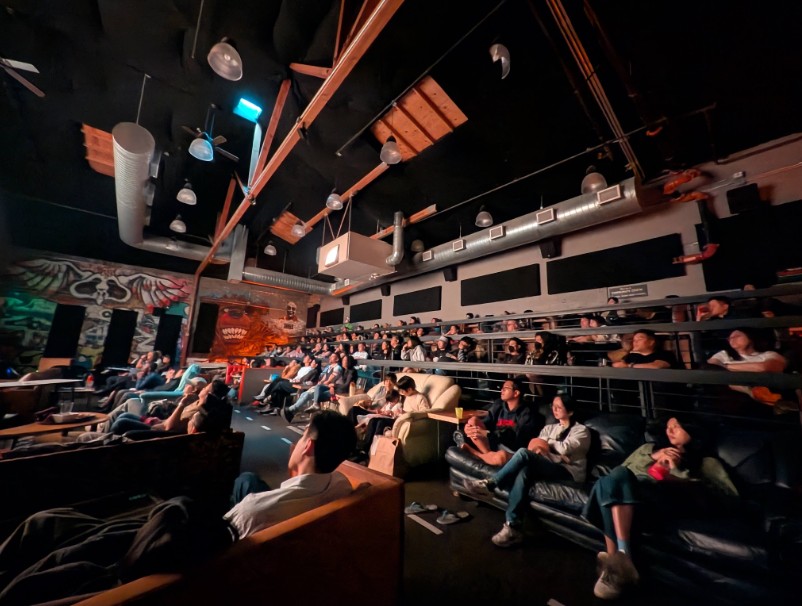
On 24 October, the 2026 Taiwan International Democratic Film Festival screened March of Happiness in Oakland, California, drawing more than 80 people. For the post-screening discussion, descendants of two figures from Taiwanese history, Lee Chun-sheng and Lin Mosei, were invited to share their family memories, and together with the audience they took the film as a starting point for exploring Taiwan’s modern history and cultural development, and the pain and challenges along its road to democracy.
Directed by Lin Cheng-sheng, March of Happiness is set in Taiwan between the end of Japanese rule and the eve of the 228 Incident. Through the stories of the people at the Bolero Café in Taipei’s Dadaocheng, it portrays social change under a change of regime, and people’s hopes and unease about the future. The film weaves personal love, ideals and life choices into the currents of history, showing how changing times deeply affect the lives of ordinary people.
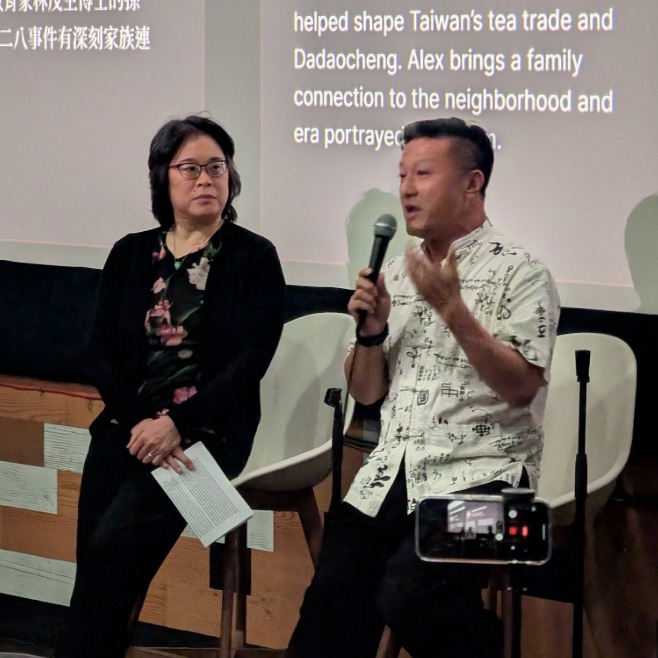
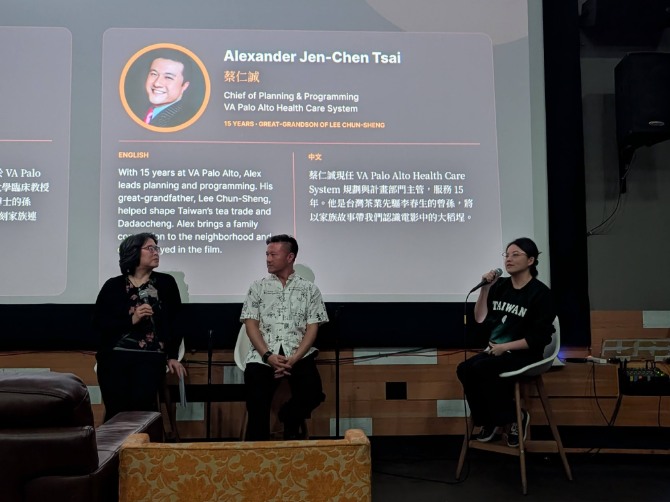
The discussion featured Alexander Jen-Chen Tsai, a descendant of Taiwanese tea pioneer Lee Chun-sheng, and Dr Jeannette Hsu, granddaughter of Taiwanese educator Dr Lin Mosei. Tsai began with his family history, describing the growth of commerce in nineteenth-century Dadaocheng, Taiwan’s tea exports and the history of its early international trade. Dr Hsu spoke about her grandfather Dr Lin Mosei’s disappearance during the 228 Incident, how this historical trauma has affected several generations of descendants, and how it has kept the family engaged with democracy and human rights in Taiwan.
From the prosperity of Dadaocheng witnessed by the Lee Chun-sheng family to the loss and grief the Lin Mosei family suffered in the 228 Incident, the two very different family stories showed the many and profound sides of Taiwan’s history. Besides Taiwanese Americans from the Bay Area, many people from other cultural backgrounds attended, and through the film and the discussion they came to better understand the complexity of Taiwan’s history and how hard-won freedom and democracy have been.
We thank the Northern California Chapter of the Formosan Association for Public Affairs and US Taiwan Watch for co-hosting the event, as well as the two speakers and everyone who came. The Taiwan International Democratic Film Festival will continue to preserve precious historical memories through films and the life stories of different generations, help more people get to know Taiwan, and keep alive the commitment to freedom, democracy and human rights.
14:00–14:10 Opening remarks by the host
14:10–16:00 Screening: March of Happiness
Films screened
March of Happiness
Directed by Lin Cheng-sheng, March of Happiness is set in Taiwan between the end of Japanese rule and the eve of the 228 Incident, and unfolds around the Bolero Café, a well-known cultural gathering place in Taipei's Dadaocheng. Through the love story of A-chin, a young man returned from study in Japan, and Nuan-yu, an actress with a theatre troupe, and through the artists, intellectuals and ordinary people who gather at the café, it draws the hope and unease of a population living through a change of regime.
The film binds personal fate tightly to a decisive turn in Taiwanese history, setting love, culture and ideals against the current of the times as the 228 Incident breaks. It is both an important work of Taiwanese New Cinema and a classic that looks back on modern Taiwanese history through the lives of its characters. It was selected for Un Certain Regard at Cannes in 1999 and won Best Original Film Song at the Golden Horse Awards, among other honours.