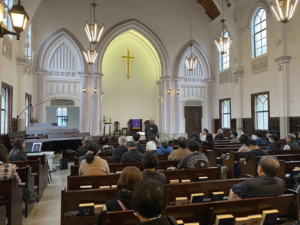
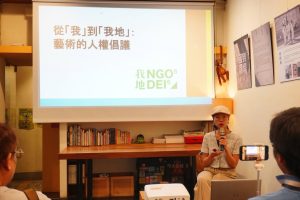
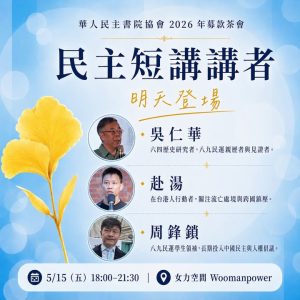
It has now been 37 years since June 4th, 1989. As memory of June 4th is increasingly suppressed in China and Hong Kong and related discussion gradually disappears, it is all the more precious that Taiwan can still openly discuss, commemorate, and reflect on it.
In this talk, Wu Renhua shared, from the perspective of both a witness and a researcher, his first-hand experience of Tiananmen Square and the streets of Beijing at the time, the scenes that remain impossible to erase, and his years-long pursuit of the truth about June 4th.
Zhou Fengsuo looked back on the organizing, actions, and historical choices of the 1989 student movement, and spoke about his continued work on China’s democracy and human rights after going into exile.
Executive Director Chang Lung-chiao (張龍僑) also spoke from Taiwan’s perspective, recalling how Taiwanese society at the time followed June 4th through live media broadcasts, rallies, and solidarity actions, and discussed the importance today of preserving the memory of June 4th and continuing human rights advocacy in Taiwan.
We were also grateful that Lee Ming-che joined us and shared his views on democracy and authoritarianism as well as his own experience, adding further depth and dialogue to the evening’s discussion.
During the discussion, an attendee raised a question: why must we keep this memory alive? What force keeps pushing us to keep remembering and keep talking about it? These questions brought the evening’s discussion back to how each of us faces history, carries memory forward, and continues to act.
Some were in the room; others kept watch from afar. Different positions together make up the memory of this history.
June 4th is not only a historical event — it remains, to this day, a continuing reminder about state violence, freedom, human rights, and how we face memory and forgetting.
Thanks again to all of the evening’s speakers, participants, and partners.
Memory cannot be erased. Bearing witness continues.