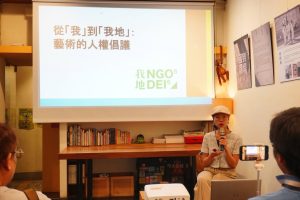
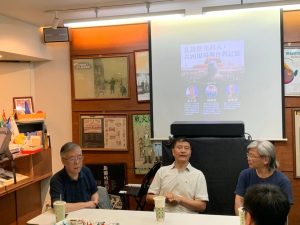
Speaking from the perspective of Taiwanese civil society, the talk responded to the rapidly deteriorating human rights situation in China and Hong Kong, analyzing the impact of cross-border repression, information control, and judicial persecution on regional security and democratic values, and pointing to the rapid shrinking of civic space since the Hong Kong National Security Law took effect.


The talk at Jinan Presbyterian Church, February 28, 2026 · Photo: New School for Democracy
Taiwan and Hong Kong: Intertwined Fates
Lee Ming-che emphasized that the fates of Taiwan and Hong Kong are intertwined, and that in the face of authoritarian expansion, Taiwan should deepen its institutional resilience and strengthen its democratic ties with the international community — advocating for human rights elsewhere while continuously reflecting on its own democratic practice and transitional justice.
“The fates of Taiwan and Hong Kong are intertwined. In the face of authoritarian expansion, Taiwan should deepen its institutional resilience and strengthen its democratic ties with the international community.”
Lee Ming-che · Human Rights Advocate
Historical Facts Should Not Be Downplayed
As the talk coincided with 228 Peace Memorial Day, some attendees tried to discuss the KMT government’s decisions in the context of the social environment at the time. Lee Ming-che responded that while historical context can certainly be discussed, historical facts should not be downplayed.
The devastating blow the 228 Incident dealt to Taiwan’s social elite and public sphere left effects that were profound and difficult to reverse. Precisely because of this, the incident continues to this day to prompt deep historical reflection and democratic introspection.