Calls for action on transnational repression and information manipulation
Event date: 15 October 2026 | Brussels, Belgium
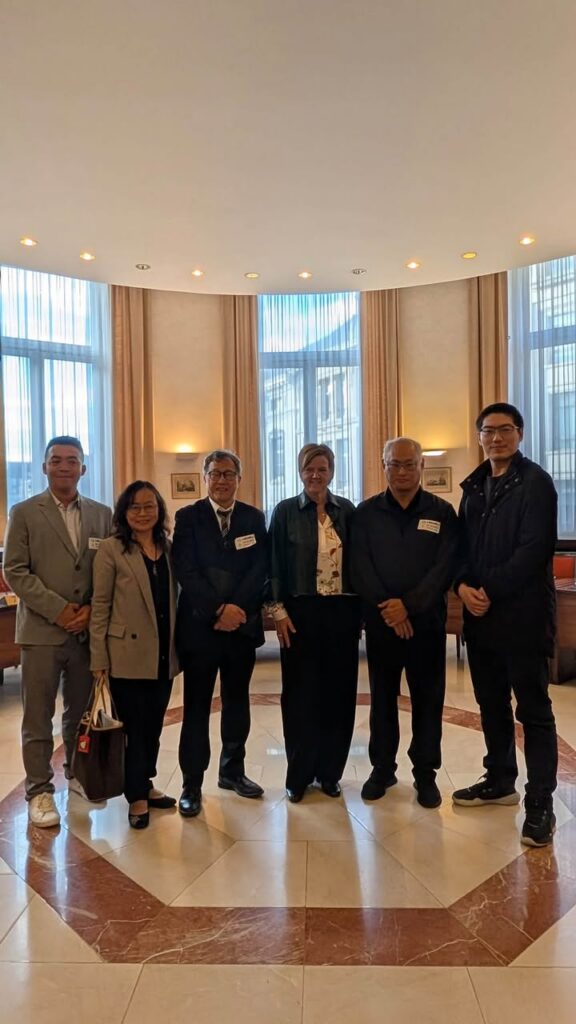
On the afternoon of 15 October 2026, Lee Ming-che and members of the visiting delegation met Els Van Hoof, a co-chair of the Belgian Parliament’s Taiwan Friendship Group, and other Belgian parliamentarians. They were accompanied by Ambassador Jhy‑Wey Shieh, Taiwan’s Representative to the European Union and Belgium. Arranged by the Taipei Representative Office in the EU and Belgium, the meeting addressed transnational repression, cognitive warfare and the challenges facing democratic societies.
Lee’s central concern was how China extends political control beyond its borders through pressure on families, intimidation and information manipulation, restricting freedom of expression and the ability to seek help in democratic societies. He called on democratic countries to recognise the difficulties faced by victims and their families and provide practical protection, so that fear does not further restrict public discussion.
Drawing on his own imprisonment in China, Lee explained that when he was arrested and cut off from the outside world, an intermediary used concerns about his safety to pressure his wife. She was told not to speak publicly or contact the Taiwanese government or civil society organisations. After returning to Taiwan, Lee also met relatives of other people detained in China. Some had received similar warnings and were afraid to disclose what had happened to their loved ones, or even unsure whether to seek help from the Taiwanese government.
Such pressure places families in a difficult position: they urgently want help, yet fear that making information public could endanger the person in detention. When these cases remain hidden, victims find it harder to obtain support, and the public has fewer opportunities to understand the reality of human rights abuses in China.
Lee also highlighted the combined impact of transnational repression and information manipulation. Spreading false claims about people facing persecution and damaging their credibility can divert public attention, weaken support for victims and create division and distrust. These threats therefore affect not only personal safety, but also the information environment, public trust and the functioning of democratic institutions.
As part of the response, Lee argued that democratic countries should improve public understanding of China’s political system and methods of control, and create more space for public discussion of human rights. Governments should also work with civil society organisations to protect human rights workers and families facing transnational repression. This would help prevent victims from being excluded or isolated because people around them fear being drawn into the situation.
Lee further urged Belgium to respect the identity and rights of Taiwanese people, avoid treating them as nationals of the People’s Republic of China, and address concerns about China’s use of “overseas police stations” and other means of surveillance and pressure abroad. By sharing Taiwan’s experience, he hopes to help democratic societies better understand and respond to transnational repression.
New School for Democracy, which took part in the visit, said it would continue to connect victims, human rights workers and international partners. Through civic education and cross-border exchanges, the organisation seeks to build understanding of those affected and promote more practical support and protection.
Media contact: Ivan Choi
Project Manager, New School for Democracy
Email: kelly@nsd.asia