With the support of Taiwan in Sweden, the Sweden–Taiwan Parliamentary Association held a human rights forum in the chamber of the Swedish Parliament, focused on China’s transnational repression and authoritarian expansion, deepening understanding at the parliamentary level of how China’s authoritarian model of governance operates.
Drawing on personal experience and long-term research, three speakers set out how the Chinese government extends its control outward — through the judiciary, information, supply chains, and legal systems — and discussed how democratic societies should respond to a threat that crosses borders.
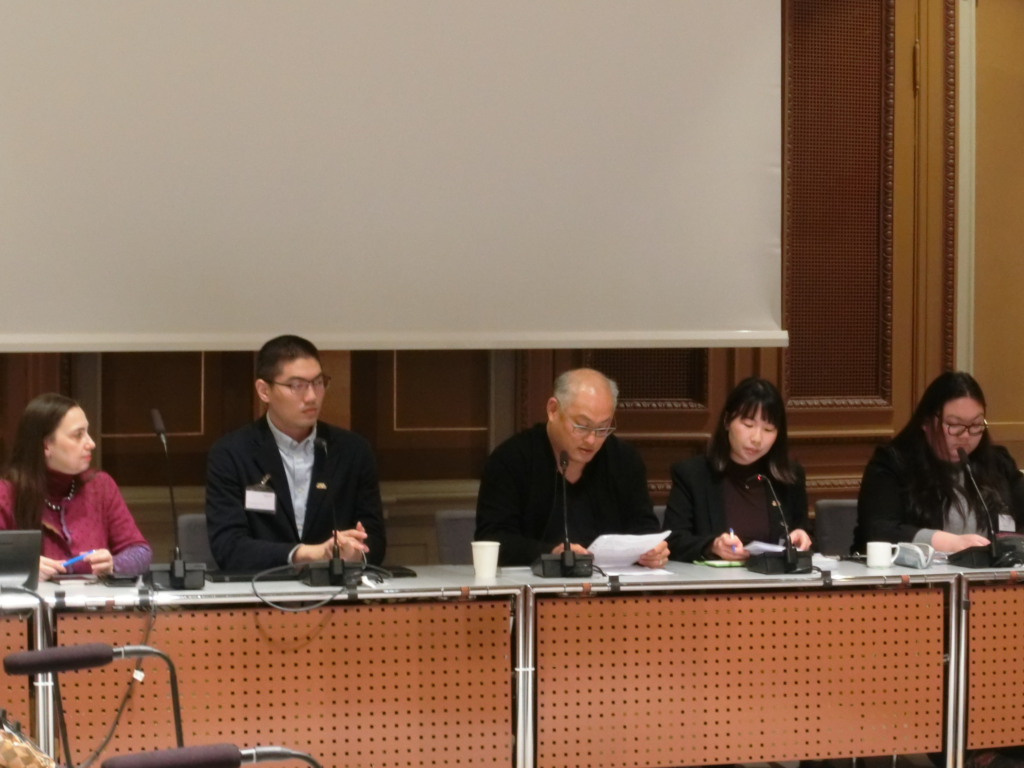
Long-Arm Jurisdiction: Judicial Abuse Reaching Across Borders
Lee Ming-che noted that every “criminal act” he was charged with took place in online speech within Taiwan, yet he was still arrested, tried, and imprisoned for years by China on charges of “subverting state power.” This is not only a matter of personal liberty and judicial abuse — it reveals the People’s Republic of China’s tendency to treat speech beyond its borders through “long-arm jurisdiction.”
The forced labour he witnessed at Chishan Prison also makes clear how an authoritarian state spreads abuses committed internally into global supply chains, in ways that are opaque to the businesses and consumers of democratic countries.
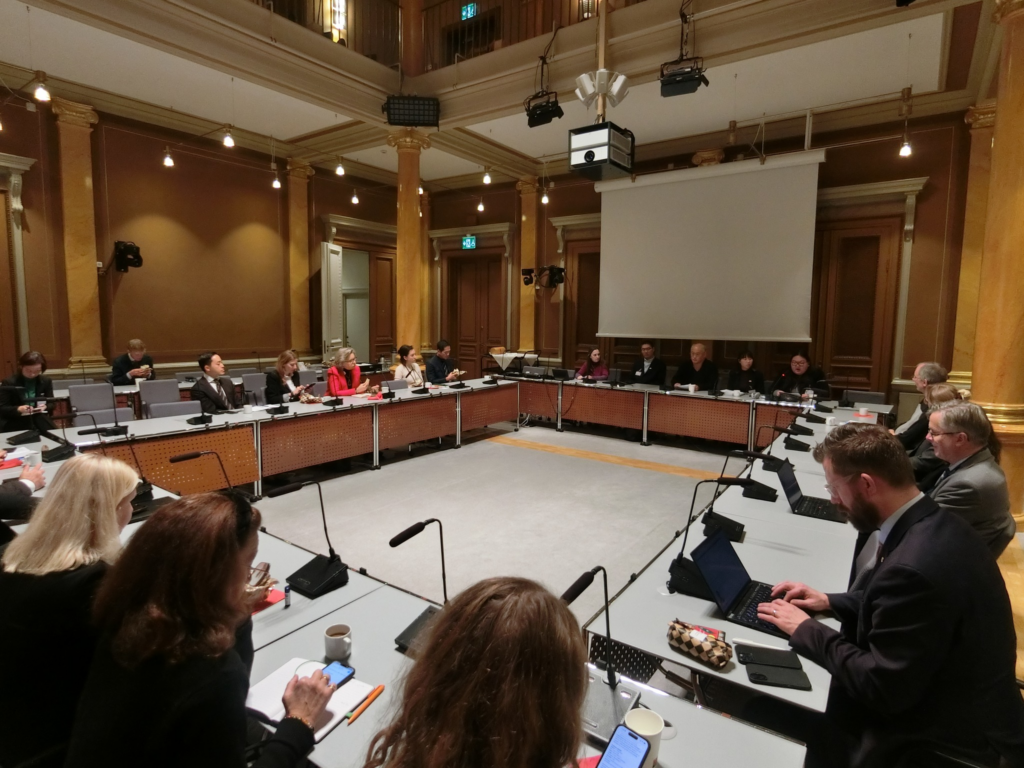
“Taiwan therefore holds a dual position — it is both a target of authoritarian expansion and a vantage point from which the logic of that authoritarianism can be explained clearly to the world.”
A Systemic Threat, Not Isolated Incidents
Tashken Davlet stressed that the Chinese Communist Party’s infiltration of Taiwan and these practices are not isolated incidents but interlocking policy instruments, aimed at redrawing the international community’s boundaries around speech, freedom, and security. Together the three speakers cautioned that if democratic countries wish to maintain an open and free international order, they must confront the expansionary logic China applies across the judicial, informational, and economic spheres, and build closer networks of cooperation with communities living under authoritarian pressure.
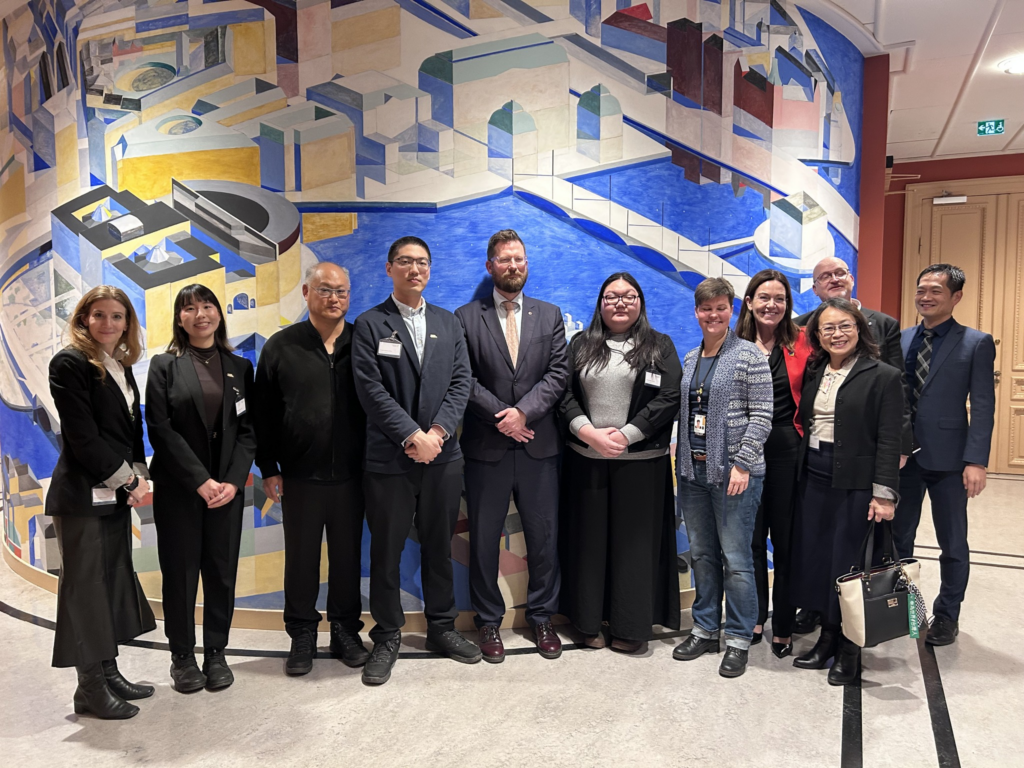
This forum deepened understanding at the level of the Swedish Parliament of China’s authoritarian model of governance, and laid firmer foundations for cooperation between Taiwan and Sweden on democracy, human rights, and civil society.